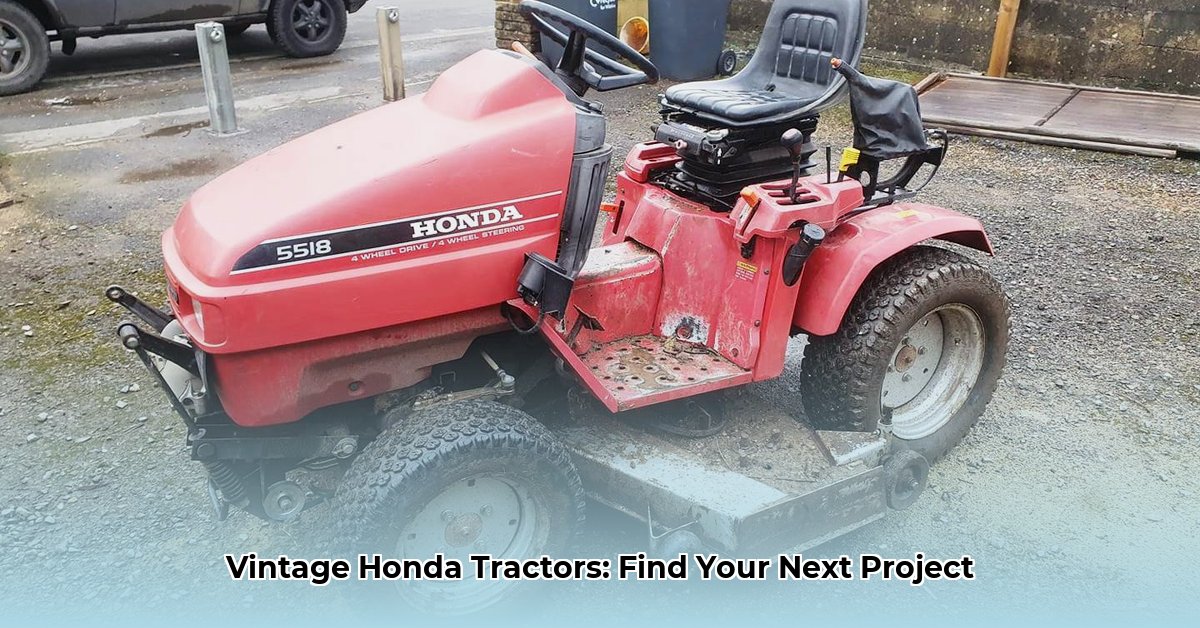
Tractor Honda: The Enduring Legacy of a Classic
Imagine a tractor so beloved, it commands a devoted following decades after its production ceased. That's the Honda 5000 series. These aren't just rusty relics; they're legendary for their reliability and surprising power, creating a vibrant niche market that refuses to fade. This article explores the enduring appeal of the Honda 5000, the challenges of maintaining these vintage machines, and the resourceful individuals keeping them running. We'll uncover the secrets to keeping your Honda 5000 purring for years to come. For more detailed specifications, check out this helpful resource: Honda 5000 Info.
The Unexpected Resurgence of a Vintage Workhorse
The Honda 5000 series' continued popularity is a fascinating phenomenon. Its compact size, powerful engine, and unparalleled reliability made it a favorite amongst farmers, landscapers, and hobbyists. This combination of quality and scarcity has driven demand, transforming these tractors into highly sought-after collectibles and essential workhorses for those valuing dependable equipment. This unexpected resurgence has fostered a unique ecosystem: a community of passionate owners, skilled mechanics, and resourceful parts suppliers. At the heart of this community are businesses like Formula H, a shining example of how dedication and expertise can cultivate a thriving niche market. But have these businesses encountered insurmountable challenges?
Formula H: A Case Study in Specialized Success
Formula H isn't your average tractor dealership. They've carved a unique niche by specializing exclusively in Honda 5000 tractors, offering everything from rare parts sourcing to complex repairs and restorations. Their success highlights the potential within specialized vintage equipment markets. However, sustaining this success requires navigating significant hurdles.
Navigating the Challenges: Parts, People, and Preservation
The most significant obstacle for Formula H, and all those working with vintage Honda 5000s, is parts acquisition. Finding original Honda parts for a discontinued line is a monumental task, driving up prices and extending repair times. This scarcity not only increases restoration costs but also creates a significant risk to the long-term viability of this specialized market.
Another challenge lies in finding skilled technicians. The mechanics intimately familiar with the Honda 5000 are retiring, taking their valuable expertise with them. This knowledge gap threatens the continued maintenance and repair of these tractors. Training new mechanics on these older machines requires significant time and investment. Isn't there a way to mitigate these risks and capitalize on the market's potential?
Opportunities for Growth: Tilling the Untapped Potential
Despite the challenges, the market holds significant potential. The passionate community of Honda 5000 owners represents a substantial untapped resource. Smart strategies can capitalize on this dedicated base:
- Enhanced Online Presence: A robust online presence—a well-designed website and active social media—can connect owners with dealers like Formula H, streamlining parts and service searches.
- Customer Relationship Management: Excellent customer service fosters loyalty and generates word-of-mouth referrals, essential in a niche market.
- Diversified Parts Sourcing: Exploring alternative sources, like collaborating with vintage equipment specialists or developing aftermarket parts, reduces reliance on dwindling original components.
- Investing in Training: Supporting mechanic training through partnerships with vocational schools or apprenticeship programs ensures a skilled workforce for the future.
Actionable Advice: A Roadmap for Success
The Honda 5000 market's success depends on collaboration. Here's a breakdown of actionable steps for various stakeholders:
Dealers (like Formula H):
- Short-Term: Improve online visibility, strengthen customer relationships, invest in parts sourcing, develop a mechanic training program.
- Long-Term: Forge strategic partnerships, digitally archive service information, explore aftermarket part production.
Honda Power Equipment:
- Short-Term: Assess the feasibility of re-releasing limited batches of key parts; consider sponsoring a restoration program.
- Long-Term: Explore direct partnerships with specialized dealers.
Honda 5000 Tractor Owners:
- Short-Term: Find reputable dealers; perform regular preventative maintenance; keep detailed operational records.
- Long-Term: Proactively stockpile essential parts.
Risk Assessment: Mitigating the Uncertainties
The Honda 5000 market faces inherent risks. Here's an assessment with mitigation strategies:
| Risk Factor | Likelihood | Impact | Mitigation Strategies |
|---|---|---|---|
| Parts Unavailability | High | High | Secure multiple supply channels; develop relationships with suppliers; consider aftermarket parts. |
| Technician Shortage | Medium to High | High | Invest in training programs; partner with vocational schools; create apprentice programs. |
The Future of the Honda 5000: A Continuing Legacy
The future of the Honda 5000 remains bright. Despite challenges, the passionate community and the inherent value of these machines point to continued demand. By proactively addressing challenges and collaboratively pursuing opportunities, stakeholders can ensure the Honda 5000's legacy endures. It's a testament to resilience, ingenuity, and the lasting appeal of a well-engineered machine. The continued success of this niche market is a compelling narrative for those who appreciate quality, craftsmanship, and community. The search for parts and the dedication of those who keep these machines running is a vibrant demonstration of how a community can flourish around a legacy.